Crate Training a Bloodhound and Preventing Separation Anxiety
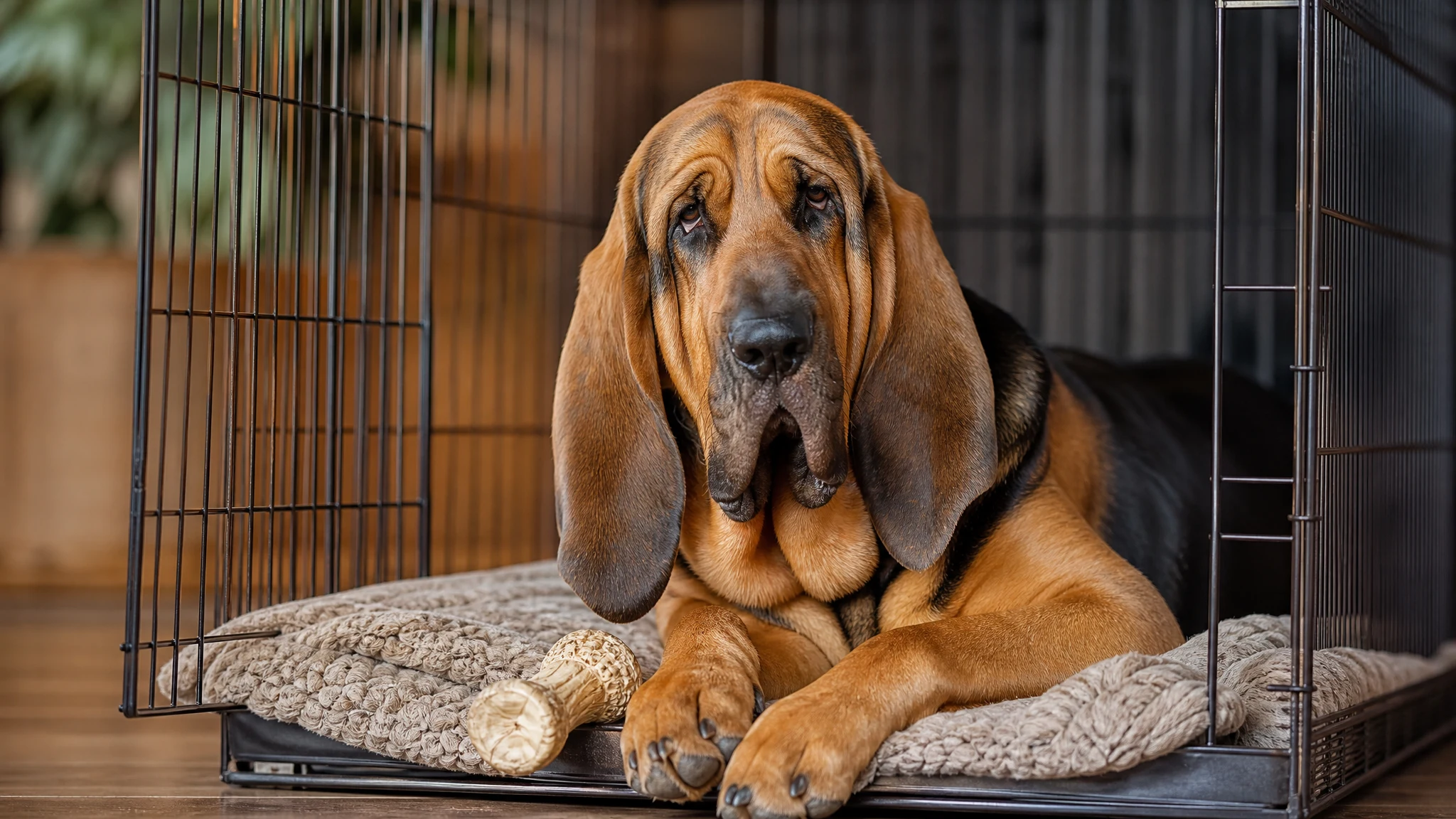
General training information. Every dog is an individual; for health or behavior concerns, see your veterinarian.
A Bloodhound that loves its crate has a calm place to rest, a safe spot during travel and a way to stay out of trouble when you cannot supervise. Crate training a Bloodhound takes patience, but the breed's gentle, people-loving nature gives you a good starting point.
The United Kennel Club (UKC) breed standard describes the Bloodhound as gentle, placid, kind and sociable with people, and particularly attached to its owner. That attachment is lovely. It is also why teaching comfortable alone time matters from the first week.
What You Need Before You Start
- A crate sized for the adult dog. See the sizing section below.
- A divider panel if you are starting with a puppy, so the space can grow with the dog.
- A washable bed or mat that fits the floor of the crate.
- Small, soft treats your dog loves, cut into tiny pieces.
- Chew items or food puzzles that suit your dog, supervised at first.
- A scent item, such as an old T-shirt that smells like you. A scenthound may find this comforting.
- A leash and a secure, fenced area or a leash-only routine for potty breaks and exercise.
- A timer or phone to track short practice sessions.
Choosing the Right Crate Size for a Bloodhound
Bloodhounds are big dogs. PetMD lists the breed at 23 to 27 inches tall and 80 to 110 pounds. The UKC standard gives an average adult male as about 26 inches and 90 pounds, and an average adult female as about 24 inches and 80 pounds. The UKC says males can reach up to 110 pounds.
That puts a grown Bloodhound at the top end of the crate size range. Most brands sell their largest sizes for dogs in this weight range, but sizing charts differ. Check the manufacturer's own chart for the weight and length it recommends, and measure your dog rather than guessing.
A good fit lets the adult dog:
- Stand up without ducking the head.
- Turn around easily.
- Lie fully stretched out on one side.
Too much space can make the crate feel less like a den. Too little makes it a punishment. If you bring home a puppy, buy a crate that suits the adult size and use a divider to shrink it for now. Ask the breeder, rescue or your veterinarian how large your particular puppy may grow, since individual dogs vary.
Also think about the door. A big, sturdy door and a roomy layout make it easier to get a heavy, long-eared dog in and out without a struggle.
Step-by-Step: Crate Training a Bloodhound
Go at your dog's pace. The Hill's Pet breed page recommends positive reinforcement, patience and short sessions several times a day. It also says harsh corrections backfire. That advice fits crate work well. The approach below is reward-based and consistent with the humane methods endorsed by the American Veterinary Society of Animal Behavior (AVSAB).
Step 1: Set up a calm, central spot
Place the crate in a room where the family spends time, such as the living room or a quiet corner nearby. Isolating a people-oriented breed in a distant room can make the crate feel like exile. Put the bed inside, add your scent item and prop the door open or remove it for now.
Step 2: Let the dog explore on its own terms
Toss a few treats near the crate, then just inside the entrance, then toward the back. Let your Bloodhound walk in, eat and leave freely. Do not push or lift the dog inside. A scenthound will often investigate with its nose first, so give it time.
Repeat this several times a day for a few days, or longer if your dog is cautious.
Step 3: Add a cue and make it a game
When your dog walks in willingly, say a cue such as "crate" in a happy voice and reward. Keep the tone upbeat. Practice a handful of repetitions per session and end while your dog is still keen.
Step 4: Feed meals in the crate
Serve meals near the crate, then just inside, then at the back. Once your dog eats calmly at the back, you can close the door for the length of the meal and open it before the dog finishes. This builds the idea that good things happen in there.
Bloat (gastric dilatation and volvulus, or GDV) is listed by PetMD as a health concern for the breed. Ask your veterinarian about feeding routines and activity around meals.
Step 5: Close the door for short periods
With the dog settled and chewing something enjoyable, close the door for a few seconds while you sit beside the crate. Reward calm behavior through the door. Open it before the dog gets restless.
Slowly stretch the time to a minute, then several minutes, then longer. Mix up the length so it does not become predictable. If your dog whines, you went too fast. Go back one step and make it easier.
Step 6: Move around the room
Once your dog is relaxed with the door closed, start standing up, walking across the room and returning. Return and reward while the dog is quiet. Open the door calmly, without a big greeting, so that arrivals and departures are not exciting events.
Step 7: Leave the room, then the house
Step out of sight for a few seconds, then a minute, then longer. Next, practice stepping outside and coming back. Eventually add short real outings. Keep the early ones brief and give your dog a stuffed chew or food puzzle just before you go.
Do not try to jump straight from a few minutes to a full workday. Build slowly, and keep sessions short and frequent.
Building Alone Time and Preventing Separation Anxiety
Crate training and alone-time training overlap, but they are not the same skill. A dog can love its crate and still struggle when the family leaves. Practice both.
Some habits that may help your Bloodhound learn that being alone is safe:
- Practice short absences every day, even when you are home. Use a baby gate or the crate while you work in another room.
- Exercise first. Hill's Pet says Bloodhounds need at least an hour of physical activity daily, and notes that scent games and nosework count. PetMD describes the need as moderate daily exercise, such as long walks and outdoor play. A dog that has used its body and nose may settle more easily.
- Use scent work as enrichment. Scatter a few treats in the grass or hide them around a room before a calm period. It gives a trailing breed a job.
- Keep departures and returns low-key. No long goodbyes, no frantic greetings.
- Keep a steady routine. Predictable meals, walks and rest times help dogs relax.
- Do not use the crate as punishment. It should stay a place the dog chooses.
PetMD notes that Bloodhounds love being part of a pack. For some dogs that makes time alone harder, so go slowly and watch your dog's body language rather than a clock.
Signs of Separation Distress
Some mild protest when you leave is common in many dogs. Persistent or intense distress is different. Watch for signs such as:
- Barking, howling or whining that continues for long stretches after you leave.
- Drooling, panting or pacing that starts as you prepare to go.
- Attempts to escape the crate or room, including chewing at the door or scratching.
- Refusing food or treats when left alone.
- Accidents indoors in a dog that is otherwise house trained.
- Following you from room to room and becoming upset when you move away.
One caution specific to this breed: PetMD calls the Bloodhound one of the most vocal breeds, with a deep howl or bay that typically cannot be trained out. So baying alone does not prove your dog is anxious. Look at the whole picture, including body language, appetite and how the dog behaves when you return. A camera can help you see what happens while you are away.
The crate itself can also cause harm in a distressed dog. A dog that is panicking may hurt itself trying to get out. If you see that, stop leaving the dog in the crate alone and get help.
When to See a Veterinarian
Talk to your veterinarian if your dog shows intense or worsening distress, injures itself, refuses to eat when alone or has sudden changes in behavior. Medical problems can look like behavior problems, and only a veterinarian can sort out which is which. This article cannot diagnose a dog, and it does not offer medication or supplement advice.
Your veterinarian can also refer you to a qualified behavior professional who uses reward-based methods. Ask about their approach before you start, and steer clear of anyone who recommends shock, prong or choke collars, or dominance techniques. These are not in line with AVSAB guidance.
Mention these breed-related health topics at checkups, since PetMD and Hill's list them for Bloodhounds:
- Ear infections, tied to the breed's floppy ears.
- Skin fold dermatitis.
- Eyelid conformation disorders.
- Hip and elbow dysplasia.
- Bloat (GDV).
Check the crate bedding and your dog's ears and skin folds regularly, and ask your veterinarian what to look for and how to care for them. Sudden restlessness, a swollen belly or repeated unproductive retching needs urgent veterinary attention.
Tips and Common Mistakes
- Going too fast. Rushing from short to long absences is the most common error. If your dog struggles, back up a step.
- Using the crate as a time-out. That teaches the dog to dread it.
- Letting the dog out during whining. If your dog is upset, wait for a brief pause if it is safe to do so, then open the door. Better still, keep sessions short enough that whining rarely starts.
- Skipping exercise. A bored, under-exercised dog is harder to settle.
- Leaving a collar or tags that can snag. Ask your veterinarian or crate manufacturer about safe practice.
- Using a crate that is too small. A grown Bloodhound needs one of the largest sizes.
- Letting the dog off leash to wander. PetMD says Bloodhounds follow scents away, so keep them leashed or in a secure fenced yard during potty breaks and exercise.
- Expecting the baying to stop. Plan for neighbors and apartment walls if you live close to others.
What Results to Expect
Many dogs learn to relax in a crate over a few weeks of steady, positive practice. Some take longer. PetMD describes Bloodhounds as independent thinkers that can be indifferent to training methods, so expect to repeat steps and keep sessions fun.
With consistent, gradual work, your dog may come to treat the crate as a comfortable place to nap, and may handle short absences with less stress. Results vary from dog to dog, and no method works for every dog. Puppies, rescued adults and dogs with past experiences may all progress at different speeds.
If you are unsure how your Bloodhound is doing, check with your veterinarian or a qualified reward-based trainer. For breed-specific guidance, you can also ask the American Bloodhound Club.