Training Your Bloodhound With Patience and Rewards
Bloodhounds are independent, scent-driven and loud, so training works best when it is calm, rewarding and built in short sessions. Start with the habits that matter most from day one.
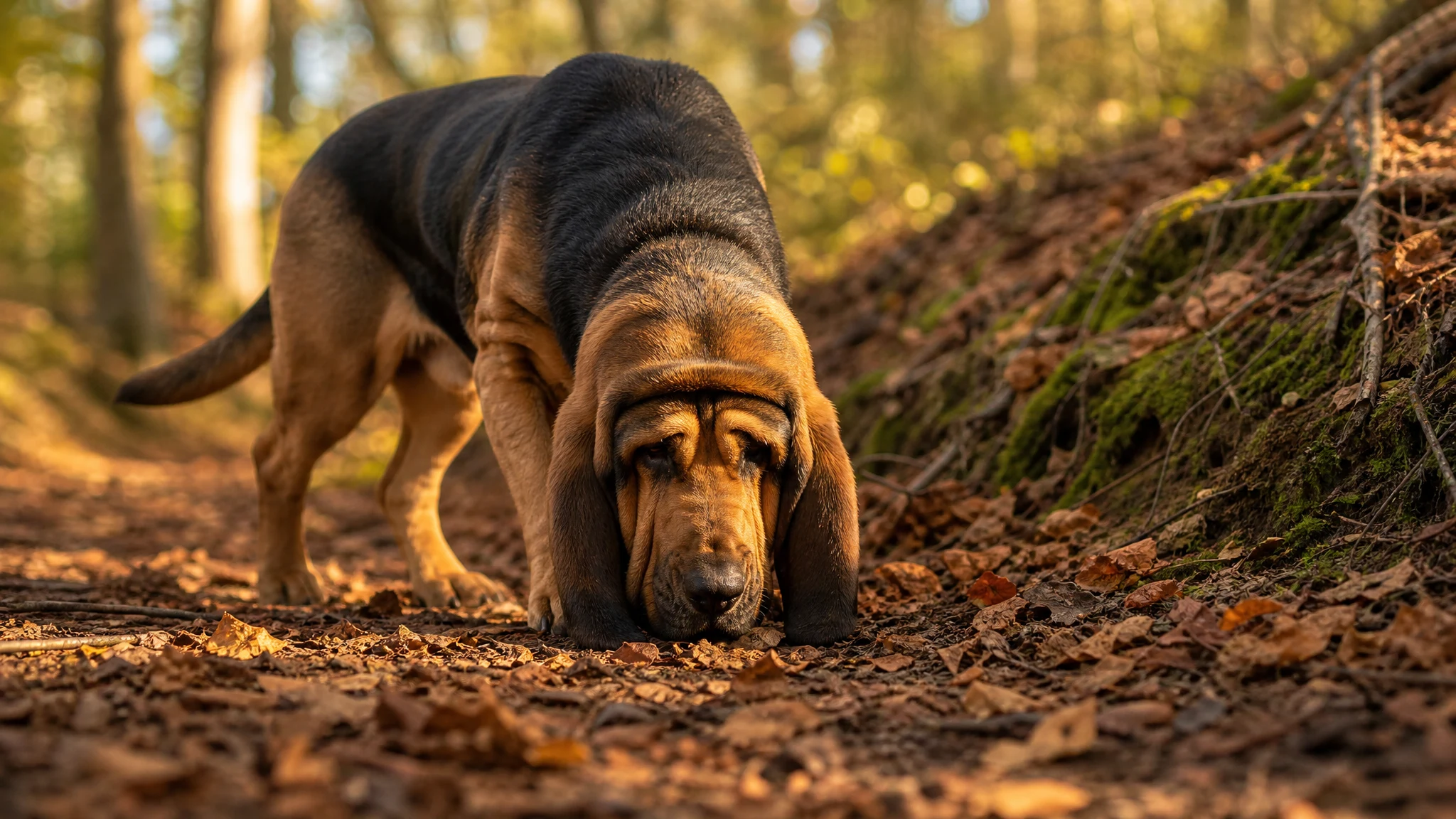
The Bloodhound at a glance
From the AKC breed page and the national breed club, as they state it.
| Origin | UKC: traces its origins to the ancient French St. Hubert Hound. Hill's: ancestry traced to hounds bred at the St. Hubert Monastery. source |
| Bred for | Trailing scenthound. PetMD: long history of assisting medieval nobles in tracking game. source |
| Height | 23-27 inches (PetMD). UKC standard: average adult male 26 inches (25 to 27), adult females average 24 inches. source |
| Weight | 80-110 pounds (PetMD, Hill's). UKC standard: average adult male 90 pounds, up to 110; females average 80. source |
| Life expectancy | 10-12 years (PetMD and Hill's) source |
| Energy | Moderate daily exercise needed (PetMD); at least an hour of daily physical activity (Hill's). AKC rating not retrievable. source |
| Trainability | Independent thinkers that can be indifferent to training methods; need patience and positive reinforcement (PetMD). AKC numeric rating not retrievable. source |
| Barking | One of the most vocal breeds; deep howl or baying that typically cannot be trained out (PetMD). AKC rating not retrievable. source |
| With children | Generally get along with children when socialized (PetMD); Hill's says they tend to be patient with children. AKC rating not retrievable. source |
| With other dogs | Love to be part of a pack, so generally get along with other pets when socialized (PetMD). AKC rating not retrievable. source |
| Shedding | Moderate shedding, 3 on a 1-5 scale (Hill's). PetMD: moderate shedder, weekly brushing, heavier shedding twice a year. source |
| Temperament | UKC standard: gentle, placid, kind and sociable with people, particularly attached to its owner; may be somewhat reserved and stubborn; never aggressive. source |
Bloodhound Training Guides
Practical guides on leash manners, recall, scent play and calm routines for a breed that follows its nose.
Puppy
From the first night home to adolescence: a Bloodhound puppy's training.
Training basics
Potty, crate and leash training, written for Bloodhounds.
Behavior
The Bloodhound problems owners ask about most, and the instincts behind them.
Exercise and jobs
How much a Bloodhound needs to do, and the sports and work the breed was made for.
Bloodhound Training Questions Answered
Are Bloodhounds hard to train?
PetMD describes Bloodhounds as independent thinkers that can be indifferent to training methods, so they need patience and positive reinforcement. The United Kennel Club standard adds that the breed may be somewhat reserved and stubborn. Keep sessions short, pay well, and expect progress to take time. Individual dogs vary.
Can I train a Bloodhound to be off leash?
PetMD says Bloodhounds follow scents away, so they must be leashed or in a secure fenced yard. That is a safety point more than a training failure. A long line gives room to sniff without losing control, and your local agency sets the leash rules.
Can I train my Bloodhound to stop baying?
PetMD calls Bloodhounds one of the most vocal breeds, with a deep howl or baying that typically cannot be trained out. Plan for it: reward quiet moments and give your dog plenty of scent-based activity. If the noise seems new or sudden, ask a veterinarian.
How much exercise does a Bloodhound need?
Hill's Pet says Bloodhounds need at least an hour of daily physical activity, and scent games and nosework count. PetMD calls the need moderate, with long walks and outdoor play. Let your dog sniff on walks, and add a few short, rewarding training games.
Are Bloodhounds good with children and other dogs?
PetMD says Bloodhounds generally get along with children and other pets when socialized, and Hill's Pet says they tend to be patient with children. Each dog is an individual, so supervise young children and introduce new dogs calmly.
Bloodhound health screening
Tests the breed's club and OFA recommend for breeding dogs. Ask a breeder for results.
| Health issues the club notes | Hip and elbow dysplasia (PetMD, Hill's), Ear infections from floppy ears (PetMD, Hill's), Gastric dilatation and volvulus (GDV, bloat) (PetMD), Skin fold dermatitis (PetMD), Eyelid conformation disorders (Hill's) source |
| National breed club | American Bloodhound Club, www.bloodhounds.org (name and URL appeared in search results only; the site returned HTTP 522 and could not be opened) source |
General training information. Every dog is an individual; for health or behavior concerns, see your veterinarian.