Bloodhound Sports and Jobs: Putting the Breed's Instincts to Work
General training information. Every dog is an individual; for health or behavior concerns, see your veterinarian.
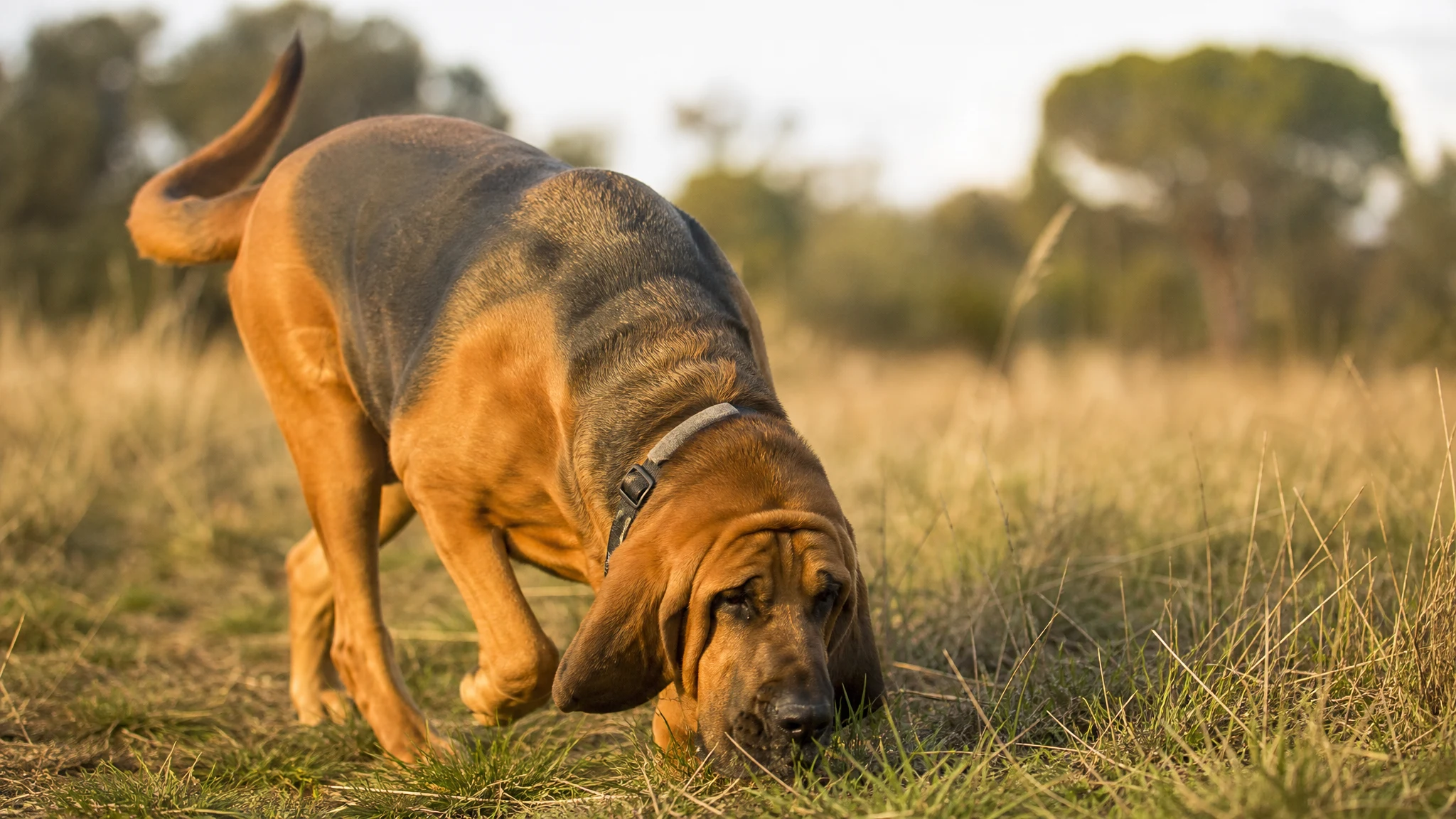
A Bloodhound with nothing to do will find something to do. Usually that means following its nose across the yard, down the street and out of sight. The better plan is to give that nose a job.
This guide shows you how to start building bloodhound sports into your dog's week. It covers what to gather, a step-by-step starting plan, the mistakes that trip up new handlers, and what you can reasonably expect. It also explains where to look for official event rules, because those change and you should read them from the source.
Why scent work suits a Bloodhound
The United Kennel Club (UKC) says the Bloodhound traces its origins to the ancient French St. Hubert Hound. Hill's Pet notes the breed's ancestry goes back to hounds bred at the St. Hubert Monastery. PetMD describes a long history of assisting medieval nobles in tracking game. In short, this is a trailing scenthound, and the nose is the whole point of the dog.
That history explains the behavior you see at home. PetMD says Bloodhounds follow scents away, so they need a leash or a secure fenced yard. Hill's says scent games and nosework count toward the breed's daily activity, which it puts at at least an hour.
A job turns that drive from a problem into a skill. It also gives you an outlet that tires the brain, not just the legs. Individual dogs vary, so treat all of this as a starting point and let your own dog show you what it enjoys.
What counts as a sport or job for a Bloodhound?
Here is the honest answer on specifics. The sources I rely on describe the breed's scent purpose and say nosework and scent games are good exercise. They do not give a list of sanctioned events or working roles. Rules, titles, age minimums and entry details differ by organization and change over time.
So for any formal event, check directly with the American Kennel Club (AKC), the American Bloodhound Club, the UKC, or a local training club. Ask which scent-based events they offer, what the entry requirements are, and whether a beginner class exists.
Many new owners use the phrase "bloodhound working dog" and picture search and rescue or law enforcement. Those roles involve agencies, handler screening and long training commitments. I cannot tell you how any particular agency selects or certifies dogs. If that interests you, contact the agency or a volunteer group in your area and ask what they require. Treat the home activities below as a foundation, not a promise of a working career.
Materials you will need
- A well-fitted flat collar or a harness. A harness is a comfortable choice for trailing-style work because it keeps pressure off the neck. Avoid prong, choke and shock collars. They have no place in this training.
- A long line, about 15 to 30 feet. This lets your dog work out a trail while you stay connected. Use a lightweight biothane or cotton line and wear gloves if your dog pulls.
- High-value treats. Soft, small, smelly pieces work well. Cut them tiny so you can reward often.
- A scent item. A clean sock, a cloth or a favorite toy works. Pick something your dog already finds interesting.
- Small containers. Cardboard boxes, plastic tubs or cups for hiding treats.
- A secure, fenced area. Early practice should happen somewhere your dog cannot slip away if the scent grabs it.
- A helper. A friend or family member makes trail games much easier.
- Water and a shady spot. Take breaks, especially in warm weather.
Step-by-step: building a scent-work foundation
Work through these steps in order. Move to the next one only when your dog does the current one reliably and happily. If you need background on rewards, markers and basic cues first, the complete guide to Bloodhound training covers the groundwork.
Step 1: Get the basics in place
Before you add scent games, teach a reliable name response, a sit, and a calm walk on a leash. PetMD describes Bloodhounds as independent thinkers that can be indifferent to training methods. Hill's and PetMD both point to positive reinforcement and patience. Pay generously for each small success. Keep sessions short and do several a day if you can, as Hill's suggests.
Step 2: Start with a treat search in the open
Let your dog watch you toss three or four treats into short grass. Say a cue word such as "find" and let your dog hunt them down. Praise as it eats. This builds the link between the cue and using the nose.
Step 3: Move to hidden containers
Set out four or five boxes in a row. Put a treat in one. Cue "find" and let your dog check each box. Reward the moment it nose-targets the right one. Rearrange the boxes between rounds so your dog learns to follow scent, not position.
Step 4: Add a scent item
Rub a treat or your hand on a cloth, then hide the cloth in one box. Reward for finding it. Over several sessions, drop the treat on the cloth and rely on the scent of the item alone, while still paying your dog at the find.
Step 5: Make the hide harder, slowly
Move the hiding spot to a bush, a corner of the room or a low shelf. Keep the early hides easy so your dog wins most of the time. A dog that succeeds often tends to stay keen.
Step 6: Introduce a short ground trail
Clip the long line to the harness. Have your helper walk a short, straight path of about 30 feet in a fenced area, drop a treat or toy at the end, and hide behind a tree or car. Let your dog sniff the helper's scent item at the start, say your cue, and follow behind with slack in the line. Let your dog lead. When it reaches the end, reward with a fun party of treats and praise.
Step 7: Lengthen and add turns
Over many sessions, make trails longer, add gentle bends and let the trail age a little before your dog starts. Change one thing at a time. If your dog loses interest or wanders, go back to the last level it enjoyed.
Step 8: Explore classes and clubs
Once your dog enjoys the games, look for a class. A local dog training club or scent-work class can show you what a structured session looks like. Watch one first, if allowed. Ask how instructors reward dogs and whether they use any aversive tools. Walk away from any program that relies on force. Then check the AKC and the American Bloodhound Club for current event information.
Tips for success
- Keep it short. Five to ten minutes of focused work is plenty to start. Hill's recommends several short sessions each day.
- Let the nose lead. Do not pull your dog along. Your job is to follow safely and keep the line from tangling.
- Use the same cue every time. Consistent words help your dog know the game has started.
- End on a win. Finish with an easy find so your dog leaves happy.
- Mind the weather. Heat is hard on a heavy dog. Work early or late in the day and offer water.
- Combine with ordinary exercise. Scent games add to, not replace, daily walks. Hill's says at least an hour of physical activity each day.
Common mistakes to avoid
- Training off leash in an open area. PetMD is clear that Bloodhounds follow scents away. Use a long line or a fully fenced yard until a professional trainer or club instructor tells you your dog is ready for more.
- Using harsh corrections. Hill's says harsh corrections backfire. The American Veterinary Society of Animal Behavior (AVSAB) supports reward-based methods, and that is the approach used here.
- Making it too hard too fast. A dog that fails repeatedly may disengage. Drop back a level.
- Expecting speed. Trailing is slow, thorough work. A dog that sniffs every inch is doing what the breed was built to do.
- Skipping breaks. Scent work is mentally tiring. Short pauses help your dog stay focused.
- Trying to stop the baying. PetMD says the deep howl or baying typically cannot be trained out. If your dog bays on a trail, that is normal breed behavior, so warn the neighbors and instructors.
Health and safety on the trail
Active days are good, but watch your dog. PetMD and Hill's list hip and elbow dysplasia as common concerns, and PetMD also lists bloat (gastric dilatation and volvulus). Hill's lists eyelid conformation disorders, and both mention ear infections from floppy ears. Skin fold dermatitis also appears on PetMD's list.
None of this means your dog will have these problems. It does mean you should ask your veterinarian whether your dog is ready for more demanding activity, how to feed around exercise, and how to check ears and skin folds after outdoor work. Your vet can also tell you about health screening for your individual dog. Do not use this page to diagnose anything, and never give medication or supplements without veterinary direction.
What to expect
Results vary by dog, and no plan can promise an outcome. With regular, reward-based practice, many owners find that scent games may help a Bloodhound settle more easily at home, because the dog has an outlet for its drive. You may notice your dog becoming more focused during sessions and more willing to work with you over several weeks.
Some dogs take to the long line and trail games quickly. Others need more time, especially given the independence PetMD describes. The UKC standard says the breed may be somewhat reserved and stubborn, so patience matters more than pace.
A realistic goal is a dog that enjoys the game and returns to you happily. Whether you go on to a formal event, join a club or keep it as a backyard hobby is entirely up to you and your dog.
Next steps
- Practice the first four steps for a few weeks in a fenced space.
- Talk with your veterinarian about your dog's fitness for more activity.
- Contact the American Bloodhound Club and your local training clubs to ask about events, classes and beginner opportunities.
- Read the official rules for any event before you enter, since requirements are set by the organizers.