Common Bloodhound Behavior Problems and the Instinct Behind Each
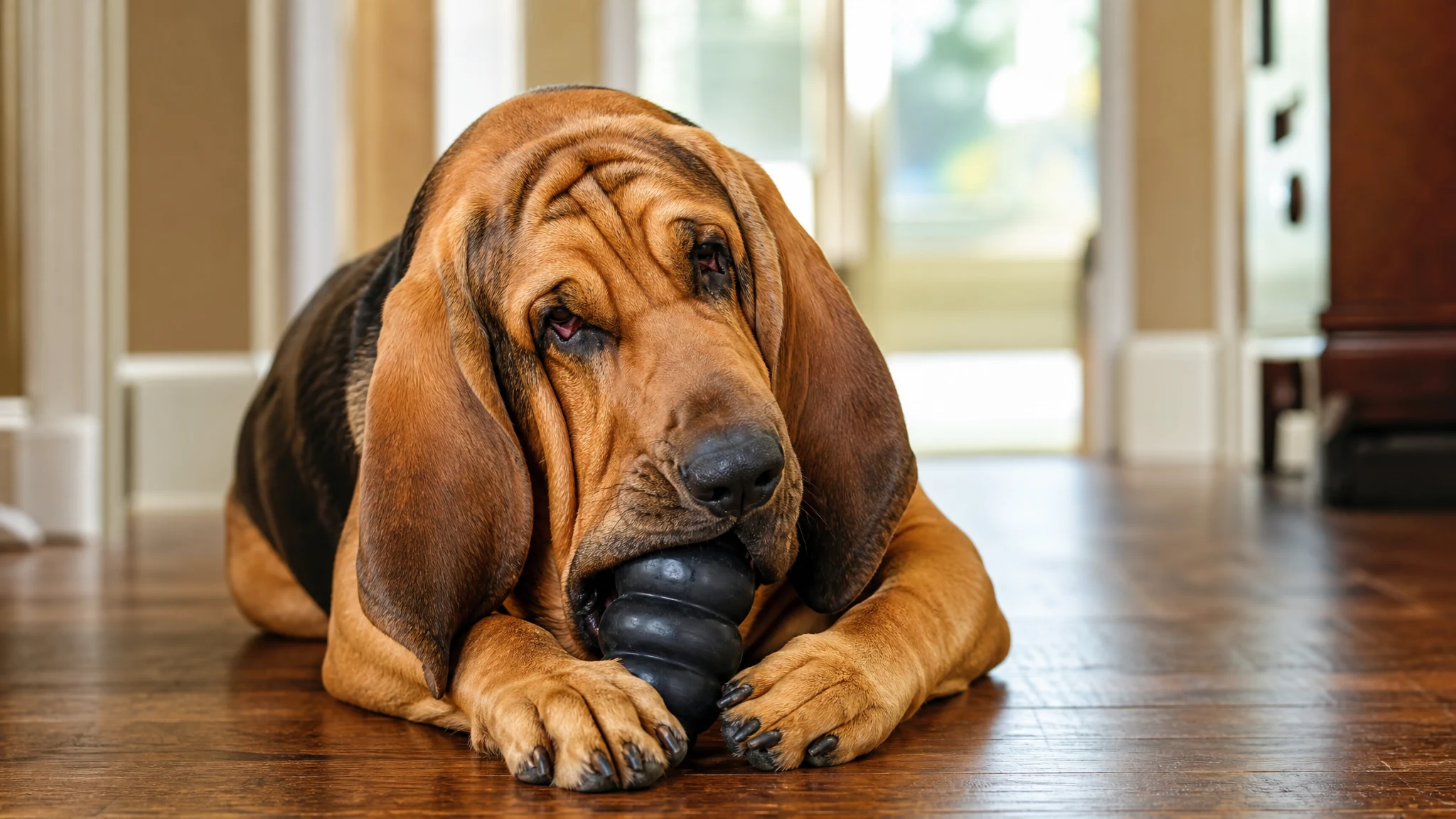
General training information. Every dog is an individual; for health or behavior concerns, see your veterinarian.
Most Bloodhound behavior problems are not defiance. They are a scenthound doing the job it was bred for in a living room, a yard or a neighborhood sidewalk. Once you see the instinct, the fix gets much easier to plan.
This guide covers the problems owners report most: following scents away, selective listening, loud baying, boredom mischief and distress when left alone. For each one you get the instinct behind it, how to prevent it and a training plan. It ends with when to bring in a certified trainer or a veterinary behaviorist.
First, Understand the Breed You Are Working With
The United Kennel Club (UKC) says the Bloodhound traces its origins to the ancient French St. Hubert Hound. Hill's Pet traces the ancestry to hounds bred at the St. Hubert Monastery. PetMD describes a long history of helping medieval nobles track game. This is a trailing scenthound.
The UKC breed standard describes the temperament as gentle, placid, kind and sociable with people, and particularly attached to its owner. It also says the dog may be somewhat reserved and stubborn, and that it is never aggressive.
PetMD lists the main challenges as independence, indifference to training methods, a strong pull to follow scents away and loud baying. Individual dogs vary, so treat all of this as a starting point and not a prediction for your dog.
For the bigger training picture, see our complete guide to Bloodhound training.
Materials You Will Need
- A secure fenced yard, or a long line you can attach to a well-fitted harness or flat collar
- A standard leash for walks
- Small, soft treats your dog finds exciting, cut into tiny pieces
- A treat pouch so rewards are fast and easy to reach
- Scent toys or a few cardboard boxes for nose games
- Sturdy chew items and food puzzles
- A crate or a gated resting area
- A notebook to track what triggers each behavior
You do not need any corrective gear. Hill's and PetMD both point to positive reinforcement and patience for this breed, and Hill's notes that harsh corrections backfire. The American Veterinary Society of Animal Behavior (AVSAB) also supports reward-based training.
The General Method Behind Every Fix
- Name the instinct. Write down what the dog seems to be trying to do: follow a trail, join the pack, make noise, find something to work on.
- Manage the setting. Use fences, leashes, gates and routines so the unwanted behavior has fewer chances to happen and get rewarded.
- Give the instinct a legal outlet. A scenthound needs to use its nose every day.
- Reward what you want. Pay the behavior you like, right when it happens.
- Keep sessions short. Hill's recommends multiple short sessions per day. Three or four minutes at a time is a good start.
- Raise difficulty slowly. Add distance, distraction and duration one at a time.
Problem 1: Following Scents Away From You
The instinct
PetMD says Bloodhounds follow scents away, which is why they should be leashed or kept in a secure fenced yard. A dog on a trail is not ignoring you on purpose. The scent is simply louder than your voice.
Prevention
- Never trust off-leash freedom in an open area.
- Check fence lines for gaps, loose boards and spots where the ground can be dug out.
- Use a long line for exploring so the dog gets some freedom without a bolt risk.
- Keep gates latched and doors managed during deliveries and visitors.
Training plan
- Teach a name-and-treat game. Say the name once, then feed a treat. Repeat in a quiet room until your dog whips around happily.
- Add a recall word. Say it in the house, then reward with several treats in a row.
- Move to the yard on a long line. Call while the dog is mildly distracted. Reward at once.
- Use a "go sniff" cue. Tell your dog when it is allowed to follow its nose. This turns the instinct into part of the reward.
- Increase distractions slowly. Add a faint trail, then a stronger one, always on the long line.
Common mistake: calling your dog and then ending the fun. If every recall means leaving the good smells, the dog learns to stay away. Call, reward, then release back to sniffing.
Problem 2: Selective Listening and Stubbornness
The instinct
PetMD describes Bloodhounds as independent thinkers that can be indifferent to training methods. The UKC standard says the breed may be somewhat reserved and stubborn. A dog bred to work a trail on its own had little reason to wait for instructions.
Prevention
- Start early and keep lessons upbeat.
- Use rewards the dog truly wants, and vary them.
- Train before meals, when treats mean more.
- Stop while your dog is still interested.
Training plan
- Pick one cue at a time. Begin with sit or a hand target.
- Lure, mark and reward. Use a marker word the instant the dog does the right thing, then deliver the treat.
- Keep it short. Several mini sessions beat one long one, as Hill's advises.
- Make it a game. Hide treats on the floor after a correct response so your dog gets to use its nose as the reward.
- Fade the lure. Use a hand signal, then reward only some repeats once the behavior is solid.
Common mistake: repeating a cue over and over. Say it once, wait a few seconds, then help the dog succeed and reward. Never use force, leash jerks or intimidation. These methods can damage trust and are not part of reward-based training.
Problem 3: Loud Baying and Howling
The instinct
PetMD calls the Bloodhound one of the most vocal breeds and says the deep howl or baying typically cannot be trained out. That voice is part of a hound's working heritage. The honest goal is to manage when and how much, not to erase it.
Prevention
- Meet exercise and nose-work needs first. A bored hound often gets louder.
- Do not reward noise with attention, food or release from the crate.
- Reduce triggers you can control, such as watching the street through a window.
- Tell close neighbors about your plan, since this breed can be heard.
Training plan
- Track the triggers. Note time, place and what happened just before the noise.
- Reward quiet moments. Calmly drop a treat when the dog is quiet in a spot where it usually bays.
- Teach a quiet cue. When the dog pauses between sounds, mark it and reward. Add the word only after the pause is reliable.
- Teach an alternate job. Ask for a go-to-mat or a toy fetch when the usual trigger appears.
- Stay consistent. Everyone in the home should respond the same way.
Common mistake: yelling. To a dog, shouting can sound like joining in. Expect a quieter dog at best, not a silent one.
Problem 4: Boredom, Chewing and Digging
The instinct
Hill's recommends at least an hour of daily physical activity and says scent games and nosework count. PetMD describes moderate daily exercise such as long walks and outdoor play. A hound with a strong nose and no job will find its own work, often with your shoes, the trash or the garden.
Prevention
- Offer a daily sniffy walk where the dog sets some of the pace.
- Feed some meals from puzzles or scatter them in grass.
- Put away tempting items and keep trash secured.
- Rotate chew items so they stay interesting.
Training plan
- Start a simple scent game. Hide a treat under one of three cardboard boxes and let the dog find it.
- Add a hidden-treat search. Drop treats in a short trail across the room, then across the yard.
- Teach "leave it" and "trade." Swap a stolen item for a treat, calmly, without chasing.
- Offer a legal dig spot. If your dog digs, bury a few treats in one marked area and reward digging there.
- Add a rest routine. A tired, fulfilled dog settles more easily on a mat or in a crate.
Common mistake: only adding more running. For this breed, mental work with the nose is often the missing piece.
Problem 5: Distress When Left Alone
The instinct
PetMD says Bloodhounds love to be part of a pack, and the UKC describes the breed as particularly attached to its owner. A dog that bonds closely and likes company may find solitude hard. This is not guaranteed in every dog, but it is a common pattern to watch for.
Prevention
- Practice short absences from the first week home.
- Make the crate or rest area a calm, pleasant place.
- Keep departures and arrivals low-key.
- Give a long-lasting chew just before you leave.
Training plan
- Begin with seconds. Step out of sight, return, and reward calm behavior.
- Build gradually. Extend to a minute, then several minutes, only when the dog stays relaxed.
- Add real departure cues. Pick up keys, put on shoes, then stay. Do this many times without leaving, so those cues lose their meaning.
- Go back a step if the dog panics. Short, successful practice beats long, stressful practice.
- Exercise first. A walk and a nose game before you go often help the dog rest.
Common mistake: punishing the aftermath. A dog that is anxious will not learn calm from scolding.
Problem 6: Reserved Behavior With Strangers and New Things
The instinct
The UKC standard says the breed may be somewhat reserved. PetMD says Bloodhounds generally get along with children and other pets when socialized, and Hill's says they tend to be patient with children. The key phrase is when socialized.
Prevention and training plan
- Introduce new sights and sounds at a distance. Reward calm looking.
- Let the dog choose to approach. Never push a nervous dog toward a person.
- Ask guests to ignore the dog at first. They can toss treats without reaching for the head.
- Supervise dogs and children. Teach kids to be gentle and give the dog room to leave.
- Keep experiences short and positive. End before the dog gets overwhelmed.
A Note on Health and Behavior
Sometimes a behavior change is a health sign. PetMD and Hill's list ear infections, hip and elbow dysplasia, skin fold dermatitis and eyelid conformation disorders among the issues in this breed. PetMD also lists bloat (GDV). A dog that shakes its head, avoids touch, stops jumping or suddenly changes habits should see a veterinarian first. Your vet, not an article, should diagnose any health concern.
Tips for Better Results
- Train in many places, not only at home.
- Reward the first small step, not just the finished behavior.
- Plan for the nose. Let your dog sniff on walks, then cue "let's go."
- Keep notes. Patterns appear quickly on paper.
- Stay patient. PetMD stresses patience with this breed for good reason.
Common Mistakes to Avoid
- Letting a Bloodhound off leash in an unfenced space
- Using harsh corrections, which Hill's says backfire
- Expecting baying to disappear completely
- Long, repetitive drills that bore the dog
- Skipping daily scent work
- Ignoring early signs of distress when alone
What Results to Expect
With steady, reward-based practice, many owners see a dog that checks in more often, settles more easily and has an outlet for its nose. Progress may come in small steps and can vary from dog to dog. Some traits, including the voice and the pull of a scent, are likely to stay part of the dog for life. The aim is a manageable hound, not a different one.
When to Call a Certified Trainer or Veterinary Behaviorist
Ask for help when progress stalls or the situation feels unsafe. Consider a certified trainer who uses reward-based methods if:
- Recall and leash skills are not improving after steady practice
- You feel overwhelmed or unsure how to set up a plan
- Noise complaints or property damage are growing
Consider a veterinary behaviorist, or start with your regular veterinarian, if:
- Your dog shows intense panic when left alone, such as injuring itself or destroying exits
- You see sudden behavior changes with no clear cause
- Your dog growls, snaps or bites, or seems fearful in ways that worsen
- You suspect pain or illness is part of the picture
Check any trainer's credentials with the certifying body, and avoid anyone who recommends shock, prong or choke collars, alpha rolls or dominance methods. To find breed-specific advice and local resources, check with the American Bloodhound Club.