Are Bloodhounds Easy to Train? Temperament and Trainability FAQ
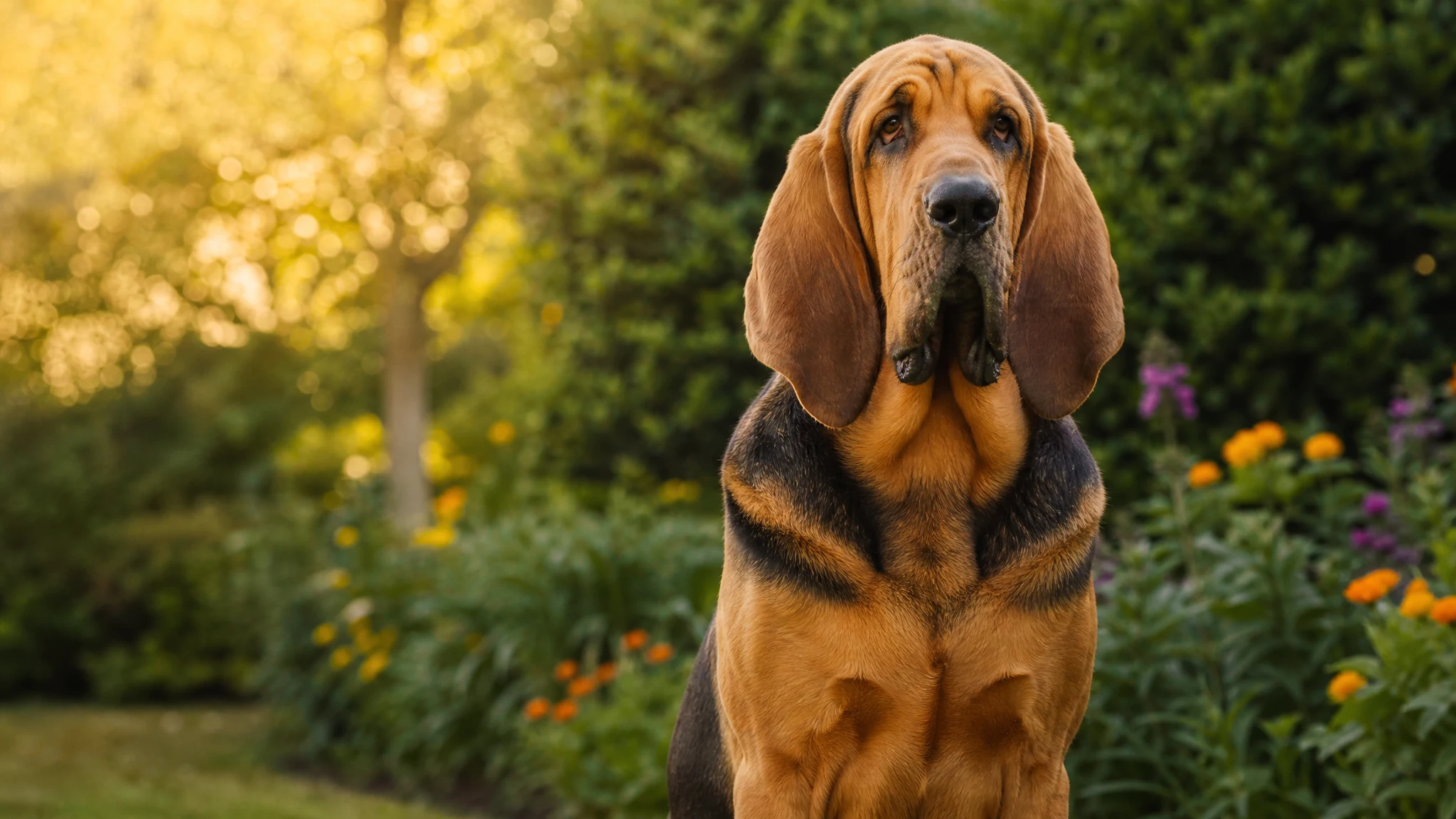
General training information. Every dog is an individual; for health or behavior concerns, see your veterinarian.
Bloodhounds are sweet, droopy and famously good with a nose. They are also a breed that makes first-time trainers rethink their plans. This FAQ answers the most common questions about Bloodhound temperament and trainability, using breed sources and honest experience-based perspective.
One note up front: individual dogs vary, so treat every answer as a tendency, not a promise. For the full step-by-step program, see our complete guide to Bloodhound training.
Trainability Basics
Are Bloodhounds easy to train?
Not in the sense of a dog that eagerly snaps to attention. PetMD describes Bloodhounds as independent thinkers that can be indifferent to training methods, and says they need patience and positive reinforcement. Most owners find them trainable, but it takes more time and creativity than with a people-pleasing breed.
What does Bloodhound trainability really look like day to day?
Expect a dog that understands what you want and then weighs whether it is worth doing. Bloodhound trainability tends to show up as steady progress with short, upbeat sessions, not as quick drilling. Hill's recommends several short sessions a day over one long one.
Are Bloodhounds smart?
The breed sources we rely on do not give an intelligence ranking, so we will not invent one. What they do describe is an independent thinker with a strong working nose. Many people mistake that independence for a lack of brains, which is usually unfair to the dog.
Is a Bloodhound hard to train compared with other breeds?
It depends on what you compare it to. A dog bred to follow a trail on its own is not built to hang on your every cue. If you want a quick, eager student, expect to adjust your goals and your rewards.
What is the AKC trainability rating for Bloodhounds?
We could not confirm a numeric AKC rating for trainability, so we will not quote one. Check the American Kennel Club breed page directly for its current ratings. In the meantime, PetMD and Hill's agree that patience and positive reinforcement are the way forward.
What Works in Training
What training method works best for a Bloodhound?
Reward-based training. Hill's and PetMD both point to positive reinforcement and patience, and the American Veterinary Society of Animal Behavior (AVSAB) supports reward-based methods too. Pay for the behaviors you like with food, praise or a chance to sniff.
How long should training sessions be?
Short. Hill's advises keeping sessions brief and fitting in several of them each day. End while your dog is still interested, and you will have a better start next time.
Do harsh corrections work on Bloodhounds?
No. Hill's and PetMD both say harsh corrections backfire with this breed. We do not recommend shock, prong or choke collars, or any dominance-style handling. They risk fear and a dog that shuts down, which makes a stubborn-leaning breed harder to teach.
What rewards motivate a Bloodhound?
Food is a common starting point, and for a scenthound, a sniff can be a reward too. Hill's notes that scent games and nosework count as exercise, so they can double as fun training payoffs. Try different rewards and see what your dog values most.
Why does my Bloodhound ignore me outdoors?
Because the nose often wins. PetMD says the breed's strong scent drive leads dogs to follow scents away from their people. Practice cues in low-distraction places first, and add distractions gradually.
Temperament
What is the Bloodhound temperament?
The United Kennel Club (UKC) breed standard describes the Bloodhound as gentle, placid, kind and sociable with people, and particularly attached to its owner. It adds that the dog may be somewhat reserved and stubborn, and is never aggressive. That mix of sweetness and stubborn streak is a good summary of living with one.
Are Bloodhounds good with children?
PetMD says they generally get along with children when socialized, and Hill's says they tend to be patient with kids. A large dog of 80 to 110 pounds can still knock over a toddler by accident. Supervise young children and dogs together, whatever the breed.
Do Bloodhounds get along with other dogs?
Usually, with socialization. PetMD says Bloodhounds love being part of a pack and generally get along with other pets when socialized. Introduce new animals gradually and reward calm behavior.
Are Bloodhounds aggressive?
The UKC standard says the breed is never aggressive. That describes the standard, though, and any dog can have a bad experience or a poor start. If your dog shows aggression, talk to your veterinarian first, then a qualified, reward-based trainer.
Energy, Noise and Daily Life
How much exercise does a Bloodhound need?
PetMD calls it moderate daily exercise, such as long walks and outdoor play. Hill's suggests at least an hour of physical activity a day. Scent games count, which is a nice fit for a dog bred to use its nose.
Do Bloodhounds bark a lot?
PetMD calls the breed one of the most vocal, with a deep howl or bay that typically cannot be trained out. You can teach manners around it, but you cannot expect a quiet dog. Think about neighbors and shared walls before you commit.
Can a Bloodhound be off leash?
PetMD says Bloodhounds must be leashed or kept in a secure fenced yard because they follow scents away. That is not a training failure, it is the breed doing what it was developed to do. Use a leash outside, and make sure your fence is secure.
Who the Breed Suits
Are Bloodhounds good for first-time owners?
They can be, if you are patient and willing to learn reward-based training. The breed's independence, baying and scent drive demand realistic expectations. A first-time owner who wants an obedient, quiet dog may find it a struggle.
Who is a Bloodhound a good match for?
Someone with time for daily walks and scent play, a secure yard, and a sense of humor. Sources describe a gentle, people-attached dog. It is a better match for a patient household than for someone who wants quick results.
What are common myths about Bloodhound trainability?
One myth is that stubborn means unintelligent, but the sources describe independence, not low ability. Another is that baying can be trained away, when PetMD says it typically cannot. A third is that firm corrections help, when Hill's and PetMD say they backfire.
Health, Size and Lifespan
How big do Bloodhounds get, and how long do they live?
PetMD lists 23 to 27 inches tall and 80 to 110 pounds. PetMD and Hill's both give a life expectancy of 10 to 12 years. Size matters for training because a big dog needs good leash manners early.
Do health issues affect training?
They can. PetMD and Hill's list hip and elbow dysplasia and ear infections, and PetMD adds bloat and skin fold dermatitis. A dog in pain may refuse cues or seem grumpy, so see your veterinarian before assuming a behavior problem.
Next Steps
Where can I learn more about the breed?
Start with the UKC breed standard, then read the PetMD and Hill's breed pages. The American Bloodhound Club is the parent club, so check with it and with the AKC for their current guidance. When you are ready to start teaching, our Bloodhound training guide for owners walks through it.